
Make category pages compete for the searches that drive revenue
A growing outdoor-products retailer had strong product depth but a complicated commercial architecture. Category pages, filtered URLs and supporting guides were competing for many of the same high-value searches.
The site was already close to page one for a large group of buying-intent terms. The opportunity was to turn that near-miss visibility into stronger category rankings and revenue without simply publishing more pages.
Project at a glance
Key details about the business, website and project scope.
Too many pages were competing
The catalogue had grown through new categories, product groupings, filters and editorial content. That was useful for customers, but search intent was not always mapped cleanly to one commercial page.
For terms such as running shoes, hiking boots and backpacks, several URLs could appear for similar searches. Authority and internal links were distributed across categories, filtered pages and informational content instead of consistently reinforcing the strongest commercial destination.
The commercial goal was not just to improve rankings. It was to move more high-intent search demand to category pages with the clearest revenue potential.
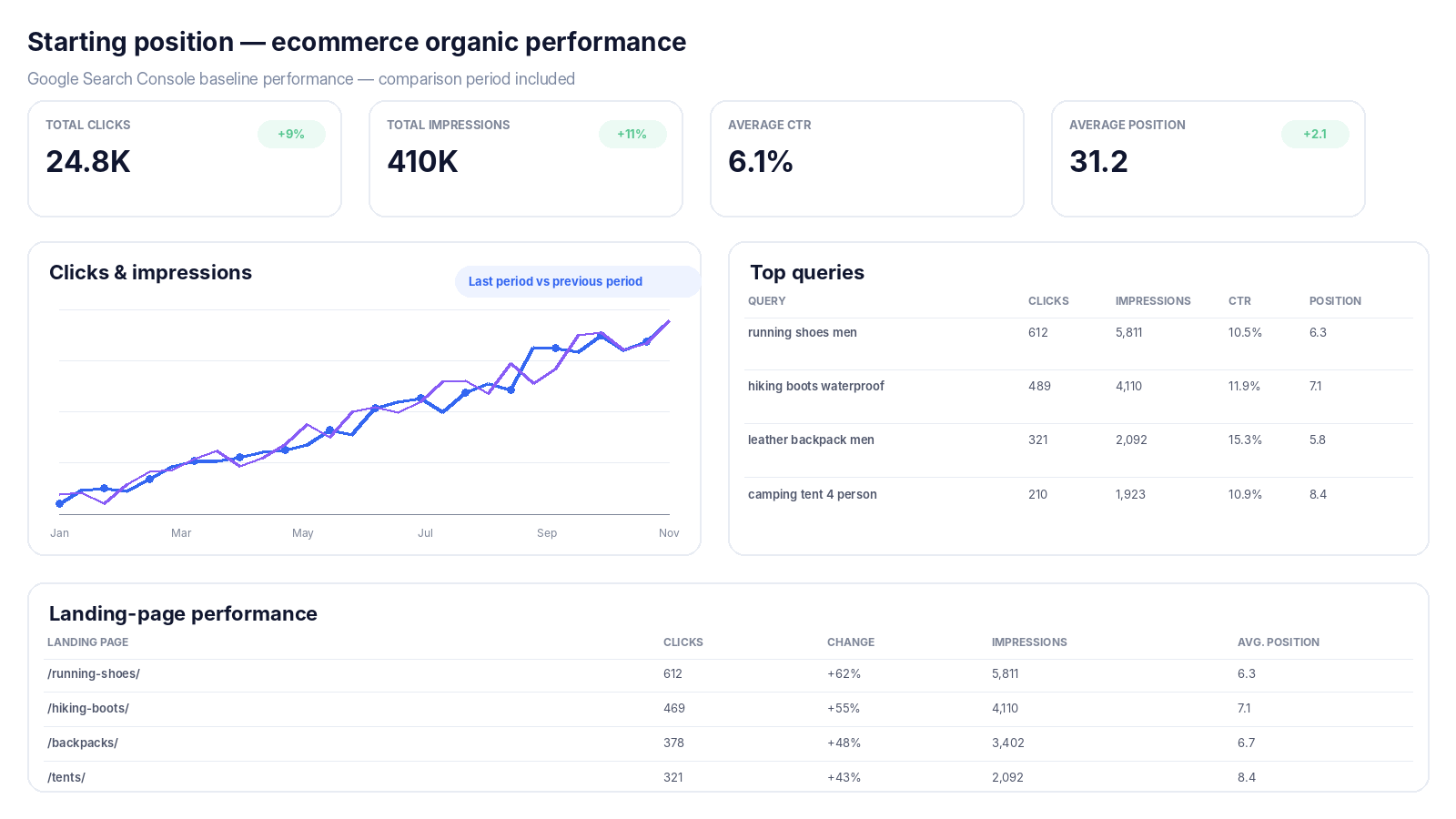
Ranking signals were fragmented
Query-to-page analysis showed that valuable searches were switching between categories, filtered URLs and editorial pages. In several cases the site had enough combined relevance and authority to compete, but those signals were fragmented.
Category-level revenue data also showed that the pages closest to the strongest positions had materially higher commercial value than the URLs currently receiving parts of the ranking signal.
The strategy therefore prioritised consolidation and support before any large new-content programme.
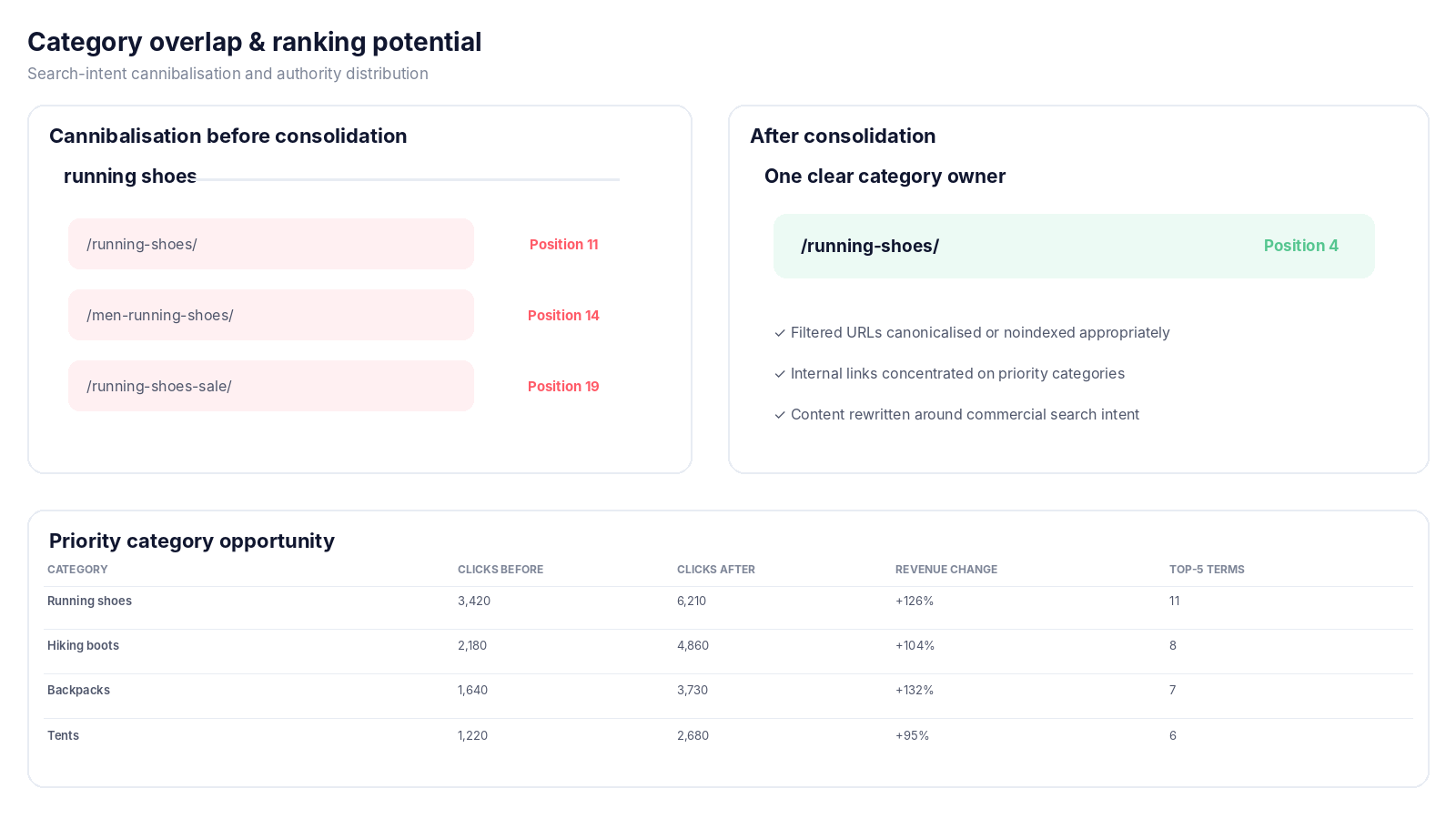
Align search demand with commercial pages
The work combined technical cleanup, category content, internal linking and selective authority support around the pages with the strongest revenue opportunity. That kept the campaign focused on improving existing commercial destinations before creating more URLs.
Map commercial intent
Define which category or collection page should own each priority search. Separate transactional demand from genuinely useful informational content.
Consolidate & strengthen
Reduce duplicate intent, improve category copy and metadata, and concentrate internal linking on the chosen commercial destinations.
Close the competitive gap
Use selective authority building and further category refinement only where rankings showed a remaining gap after structural improvements.
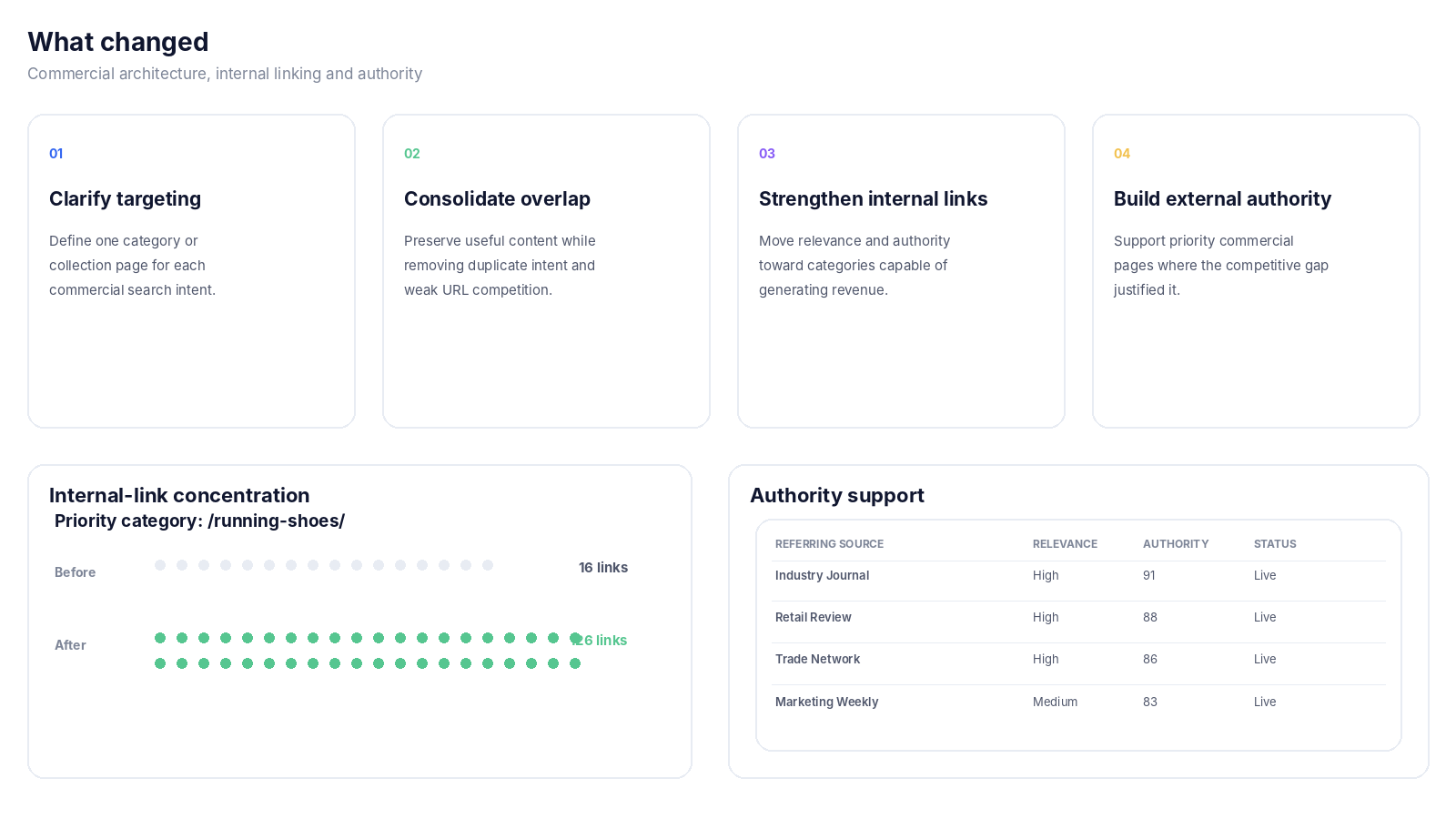
More visibility on the pages capable of producing revenue
Over nine months, organic clicks increased from 24.8K to 46.1K (+86%) and organic revenue increased from $188K to $410K (+118%). Priority commercial terms in the top five increased from 9 to 37 (+311%), tracked keywords in the top three increased from 24 to 41 (+71%), and average category position improved from 13.1 to 6.8.
The revenue increase outpaced traffic growth, which is important: the campaign was not just attracting more visitors, it was improving visibility around categories with stronger buying intent.
Category performance also became easier to manage because the business had a clearer answer to a basic question: which URL should own each commercially important search?
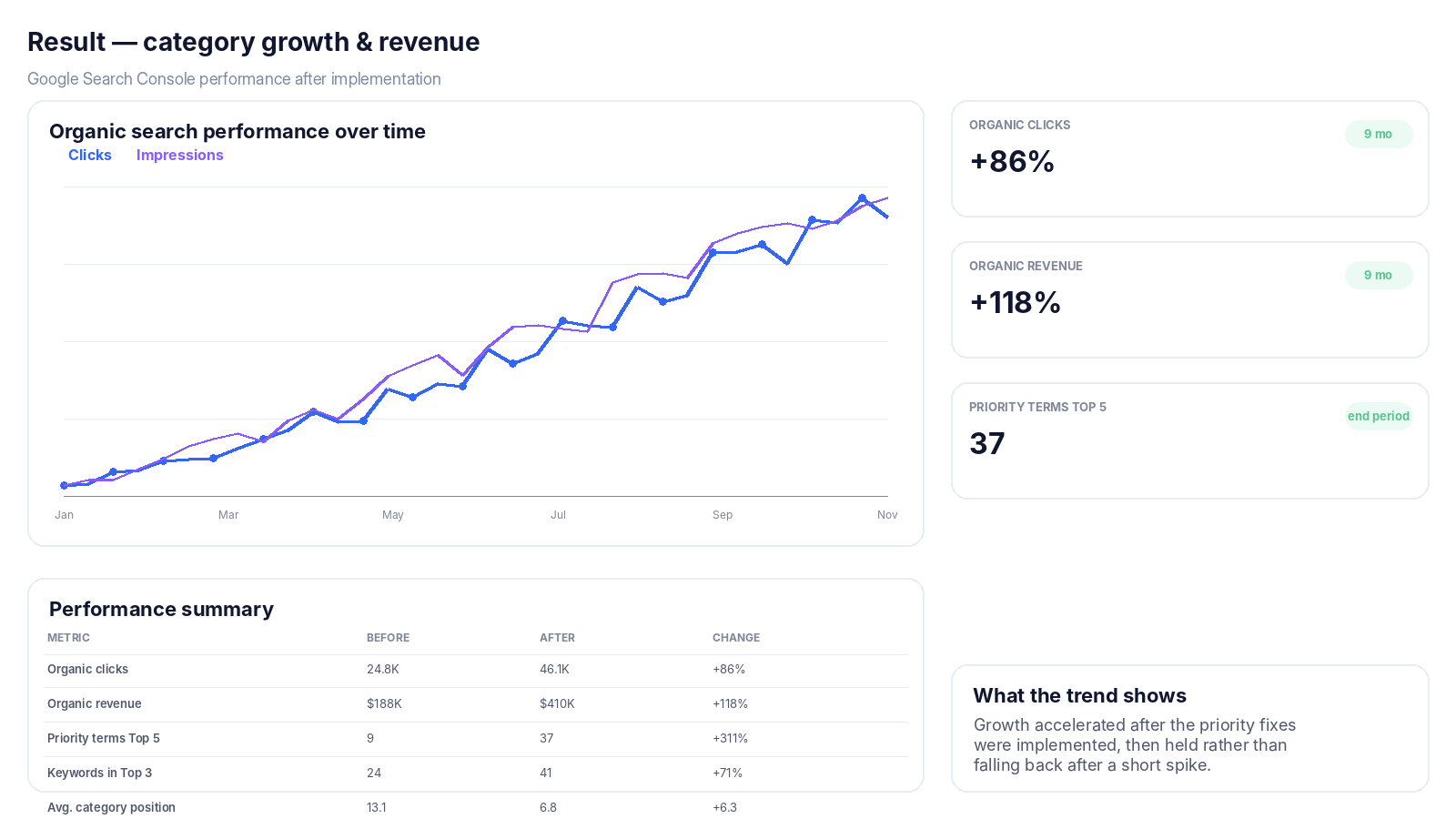
Results at a glance
Key outcomes delivered after the ecommerce SEO campaign.

Existing category pages became more valuable
The strongest commercial outcome was the 118% increase in organic revenue, from $188K to $410K, while revenue per session improved to 2.1× its starting level. That result came from better use of pages the retailer already had, supported by selective consolidation, stronger internal linking and clearer category targeting.
The campaign also reduced the pressure to keep creating new URLs whenever a ranking problem appeared. New content became a deliberate choice rather than the default response.
What made the difference
- Commercial intent was mapped before optimisation started.
- Competing URLs were consolidated instead of allowed to keep splitting signals.
- Internal links were concentrated around high-value categories.
- Authority building was used selectively after on-site structure was clearer.
Clear ownership creates stronger ecommerce growth
More URLs are not automatically more opportunity. Clear ownership often creates more value from the pages already present.