
Fix the technical problems limiting important landing pages
A specialist industrial components supplier had grown its catalogue over time, creating several thousand product, category and filter URLs. Indexation was inconsistent, Core Web Vitals were poor and high-value category pages were not receiving enough crawl or internal support.
The business did not need enterprise-scale technical SEO. It needed a focused recovery plan that made a modest catalogue site easier to crawl while protecting the pages responsible for qualified trade enquiries.
Project at a glance
Key details about the business, website and project scope.
The catalogue had become too complex
Years of adding product variants, filters and category templates had created inconsistent canonical behaviour and low-value crawl paths. Search engines were spending time on duplicate and filtered URLs while some commercially important component categories sat too deep in the site.
Performance issues made the problem harder. Heavy templates produced poor mobile Core Web Vitals and merchandising changes frequently altered internal paths, so technical fixes needed to be validated after each release.
The visible symptoms looked disconnected — unstable indexation, crawl waste, weak category-page visibility and poor performance — but the investigation showed that a small number of shared systems were responsible.
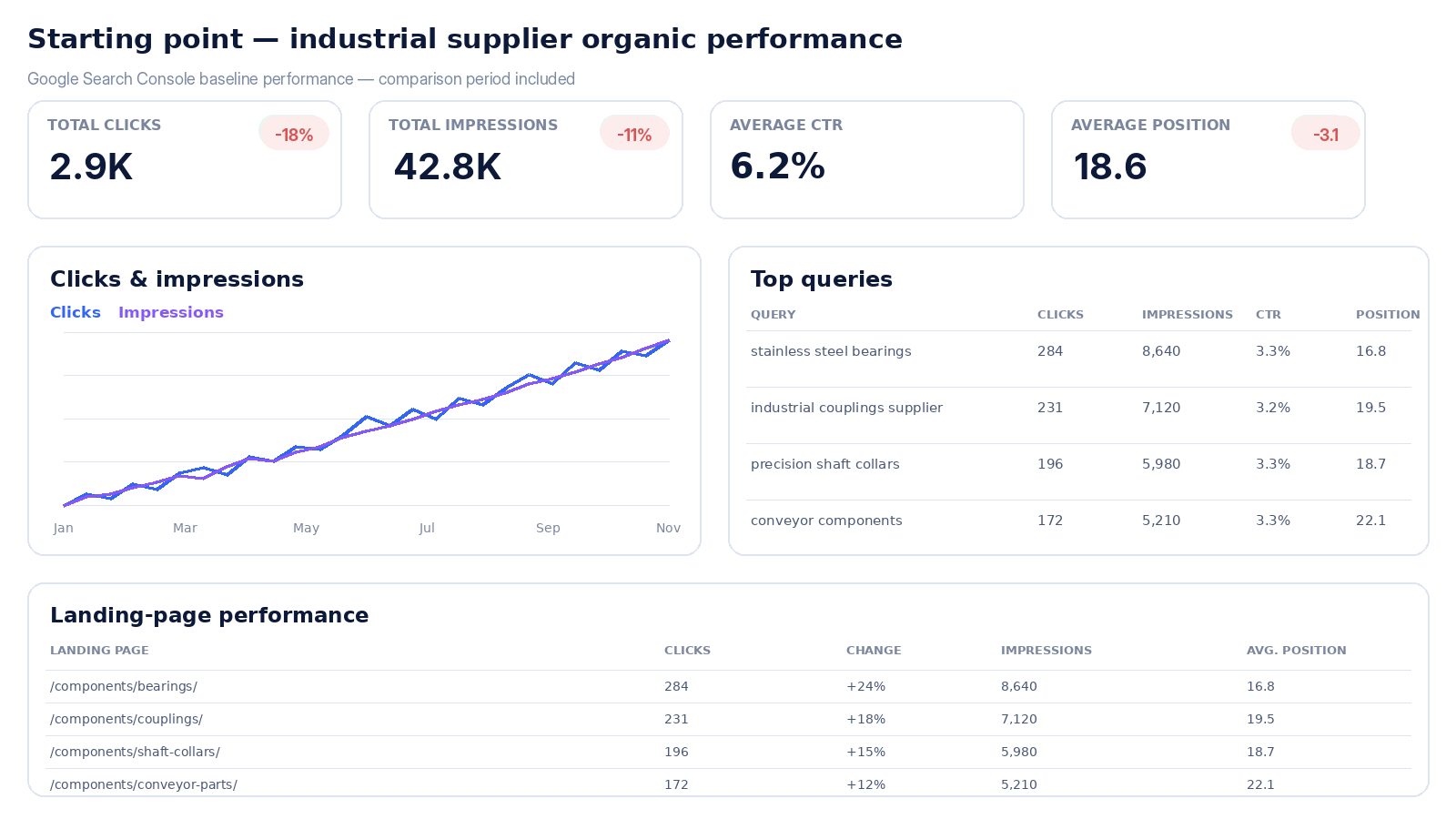
Low-value variants were consuming the index
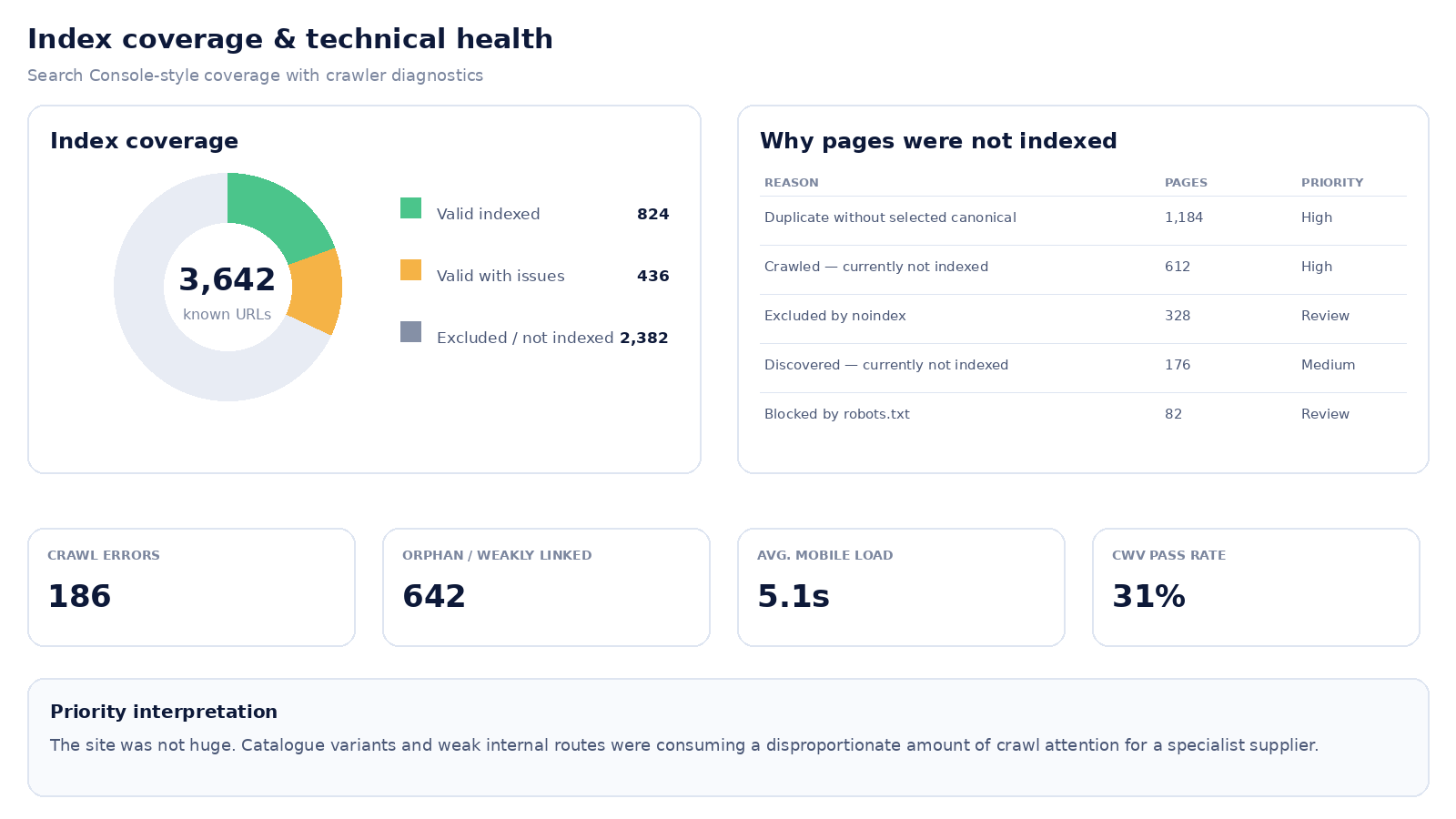
Coverage analysis showed a clear gap between known URLs and valid indexed pages. Canonical conflicts, duplicate filter combinations and weak internal routes were consuming crawl attention while commercially important component categories were not consistently receiving strong internal support.
Crawler diagnostics reinforced the same conclusion. There was technical noise, but not every warning mattered equally. The priority was to fix shared catalogue and routing problems that affected groups of valuable pages.
That distinction kept the project proportionate to the size of the business instead of turning it into an enterprise-scale technical programme.
Fix the system, then validate the pages
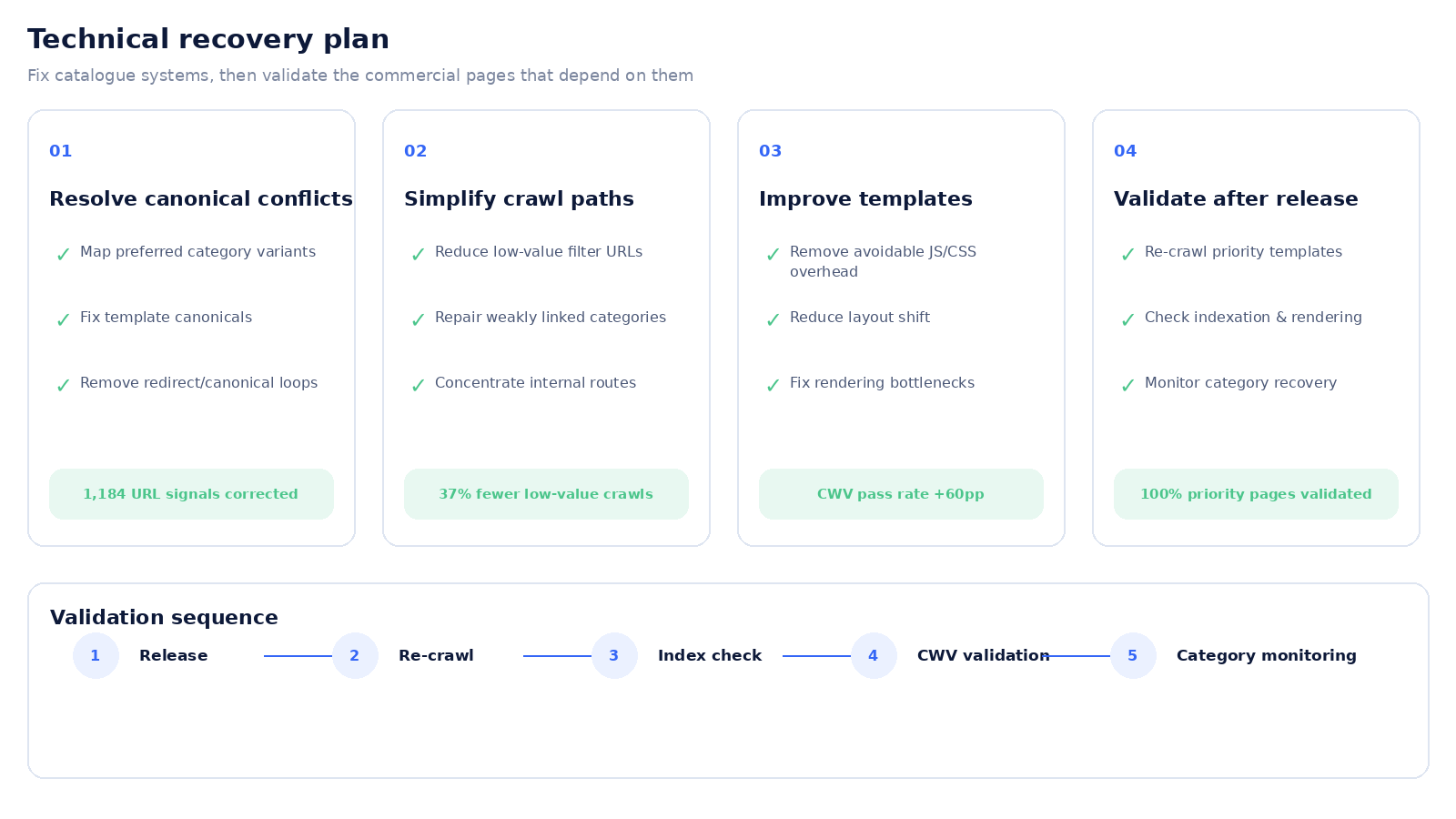
The work was sequenced so each release could be re-crawled and measured before the next layer of changes was introduced. That made it possible to confirm the effect of each technical change and reduce the risk of solving one problem while creating another.
Resolve indexation conflicts
Correct canonical behaviour, redirect loops and low-value filter variants so preferred category and product URLs became consistent.
Simplify crawl & templates
Reduce low-value crawl demand, strengthen internal paths and remove avoidable performance overhead from the templates used by priority categories.
Validate & monitor recovery
Re-crawl after each release, check rendering and indexation, measure Core Web Vitals and monitor the category pages responsible for trade enquiries.
A healthier technical foundation
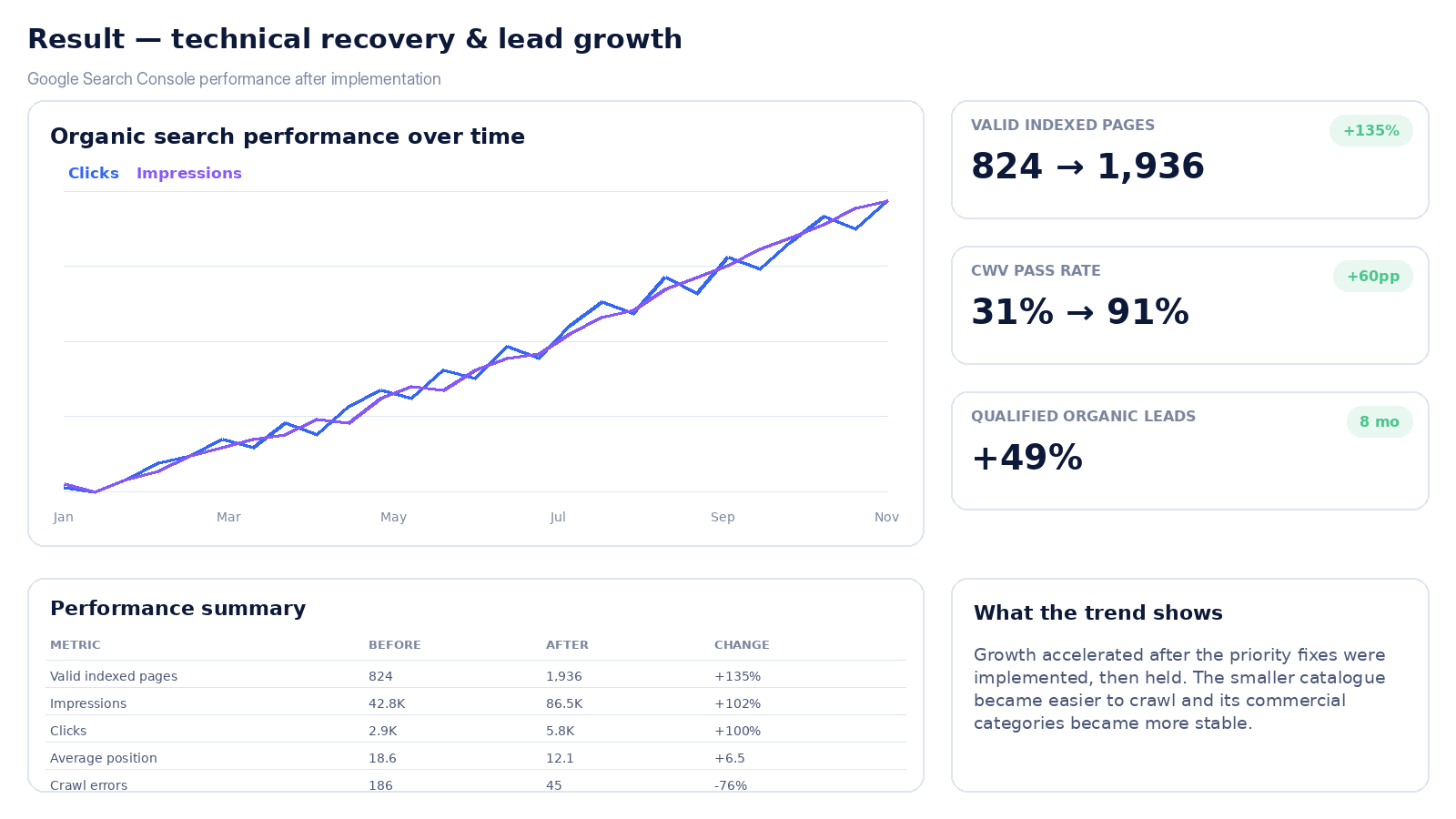
Valid indexed pages increased from 824 to 1,936 while the Core Web Vitals pass rate improved from 31% to 91%. Crawl errors fell from 186 to 45 and commercially important component categories became easier for search engines to discover and revisit.
Organic clicks increased from 2.9K to 5.8K (+100%), impressions increased from 42.8K to 86.5K (+102%) and average position improved from 18.6 to 12.1 alongside the technical recovery. Qualified organic leads increased by 49% over eight months as priority category and product pages became more stable and more visible.
The important point is proportionality: technical work was prioritised when it could improve commercial pages, not because a crawler produced a long list of warnings.
Results at a glance
Key outcomes delivered after the technical recovery programme.

Technical health supported the sales pipeline
The project did not stop when coverage and Core Web Vitals improved. The success measure was whether important catalogue pages were healthier, easier to find and producing more qualified trade enquiries.
Qualified organic leads increased by 49%, cost per lead fell by 29%, crawl efficiency improved to 2.1× its starting level and recurring technical errors fell by 76%. That reduced reliance on paid acquisition, while a cleaner technical foundation made future catalogue updates less risky and easier to validate.
What made the difference
- Shared catalogue problems were fixed instead of patching symptoms URL by URL.
- Low-value crawler noise was separated from issues affecting commercial categories.
- Template performance and catalogue architecture were treated as one system.
- Every material release was re-crawled and validated afterwards.
Technical fixes should support commercial pages
A healthier technical score only matters when it makes commercially important content easier to access, understand and rank. In this case the priority was the catalogue and category pages responsible for qualified enquiries, not the technical score in isolation.