
Turn stronger local visibility into more enquiries
A multi-location dental group had strong demand and a good offline reputation, but search visibility varied sharply between the cities and clinic locations responsible for new enquiries.
The problem was not a lack of pages. It was that the website, Business Profiles, internal links and local authority signals were not consistently telling the same story about which markets mattered most.
Project at a glance
Key details about the business, website and project scope.
Good demand, inconsistent visibility
The business served several commercially important markets. Melbourne performed reasonably well, but Sydney, Brisbane, Adelaide and Perth were much less predictable. Some locations appeared for broad dentist and emergency-dentist searches while others struggled to reach the local pack or the first page.
The website had expanded over time through similar clinic and treatment-location templates. That created overlap between city pages, inconsistent internal linking and weak differentiation between locations. Business Profile activity was also stronger in markets where the landing pages were already stronger, creating a widening gap between the best and weakest locations.
The commercial objective was clear: increase qualified enquiries in the priority markets without creating dozens of low-value location pages.
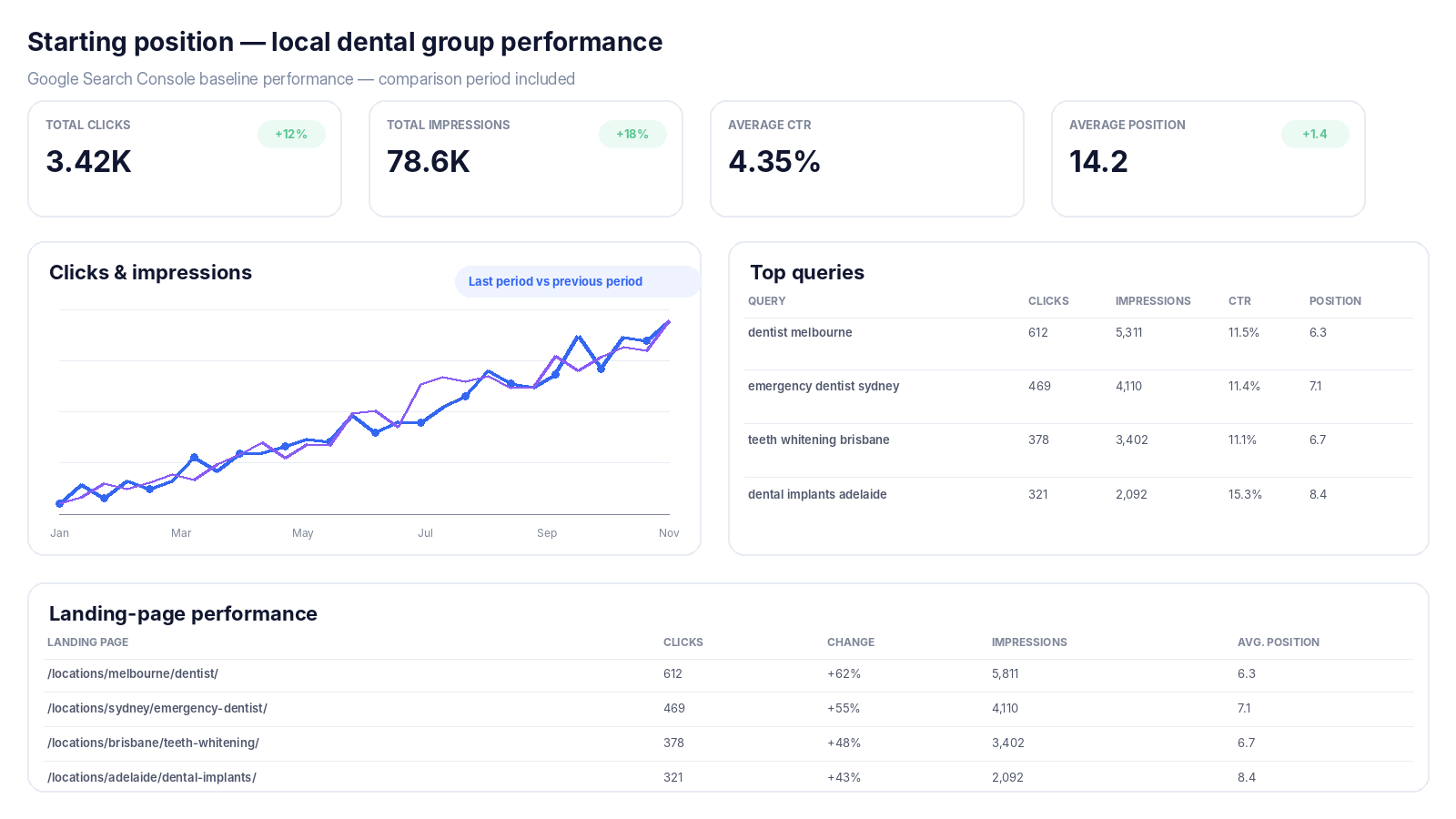
Stronger markets had stronger signals
Search Console data showed that the priority location pages were receiving different levels of impressions even where treatment demand was comparable. The gap was reinforced by local-pack visibility, Business Profile actions and internal-link strength.
Melbourne already had a clearer page structure, more relevant internal support and stronger local proof. The lower-performing cities had more generic pages, fewer contextual links and weaker authority signals. This meant the campaign did not need an identical fix everywhere.
The decision was to concentrate effort on the markets with demand, realistic ranking upside and enough operational capacity to convert additional enquiries.
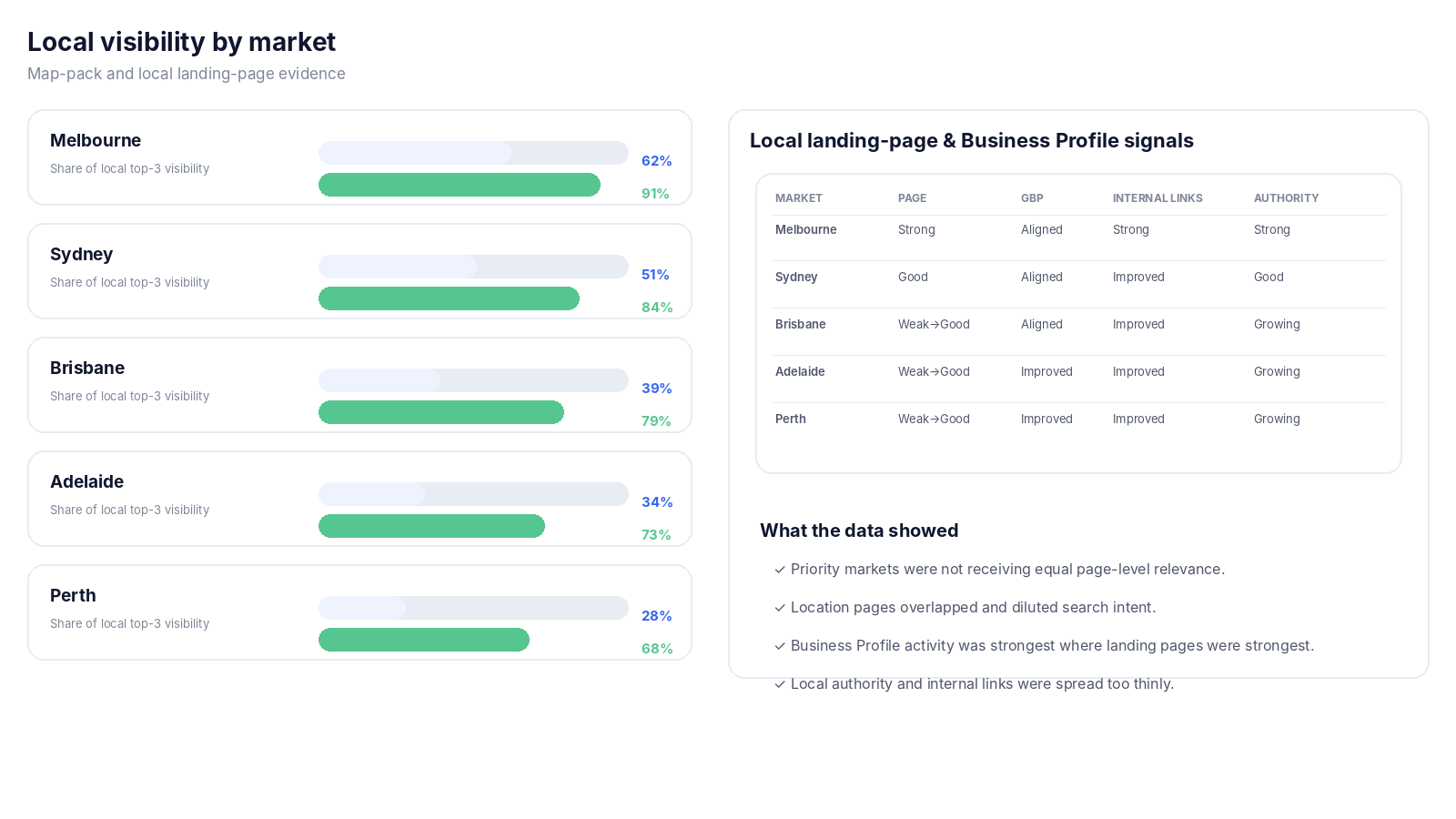
Focus the campaign on priority markets
The strategy was designed around market ownership, local relevance and measurable enquiry potential — not around creating the maximum number of location pages. Each market received the amount of work its demand, competition and commercial value justified.
Clarify the architecture
Map each treatment/location combination to one clear landing-page owner. Consolidate duplicate intent and remove generic pages that had no distinct commercial job.
Strengthen local relevance
Rebuild priority pages with genuine clinic information, treatment detail, local proof, relevant FAQs and stronger connections to the matching Business Profiles.
Concentrate support
Improve contextual internal links, regional hubs, local mentions, reviews and relevant authority around the cities most likely to produce qualified demand.
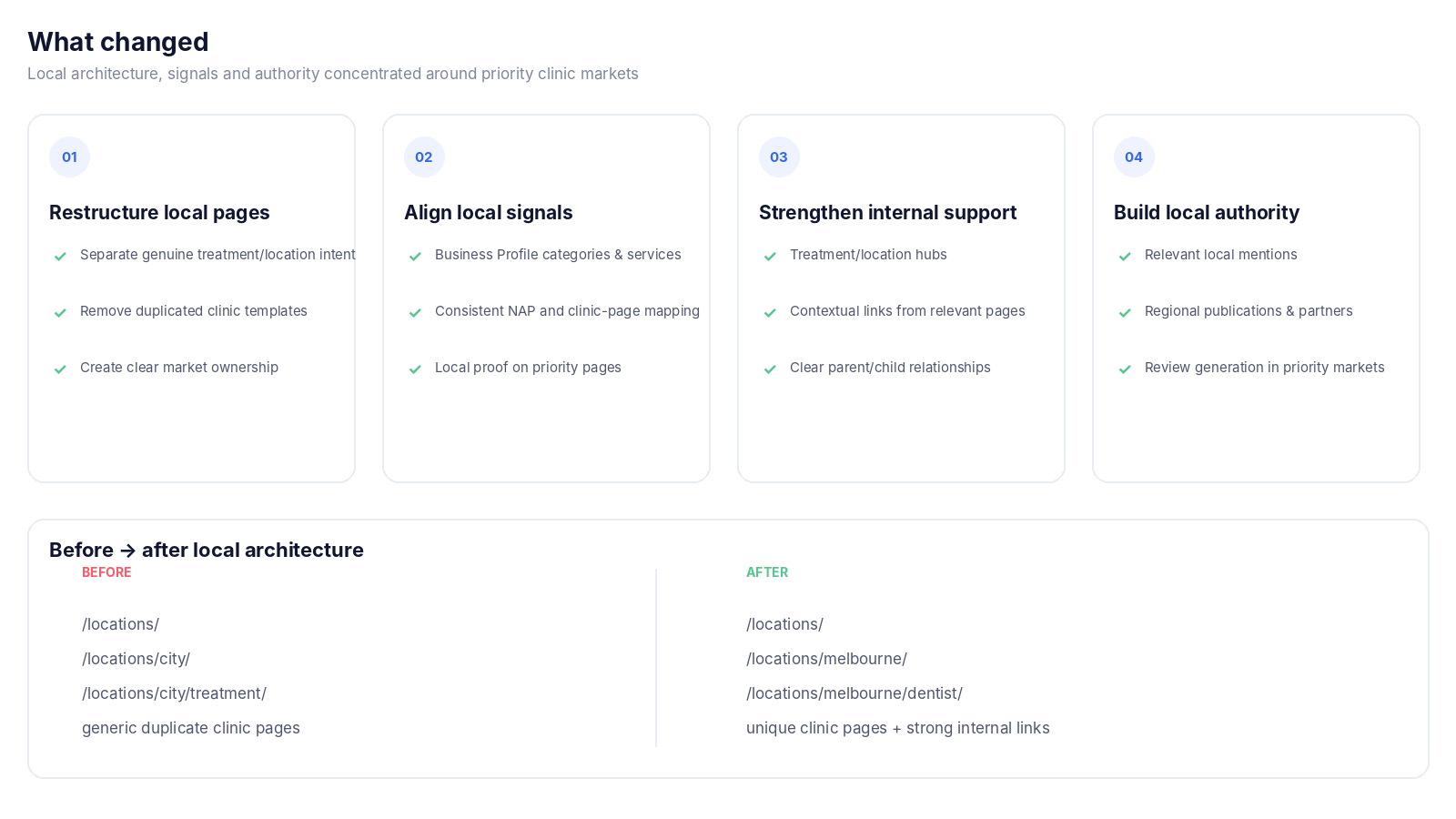
Growth concentrated where better visibility could create customers
Over 12 months, organic clicks increased from 3.42K to 8.96K (+162%), impressions increased from 78.6K to 201K (+156%) and average CTR improved from 4.35% to 7.61%. The tracked share of top-three local visibility improved from 42% to 81%, average position improved from 14.2 to 7.6 and the number of markets with top-three visibility increased from 6 to 14.
The more important commercial result was the 74% increase in enquiries. Business Profile actions increased by 88% and enquiry ROI reached 2.3×, supporting the conclusion that stronger visibility was creating more calls, website visits and location-specific demand rather than simply more impressions.
The pattern of growth mattered as much as the headline percentage. The strongest gains came from the markets that had received the clearest page ownership, stronger internal support and better local proof.
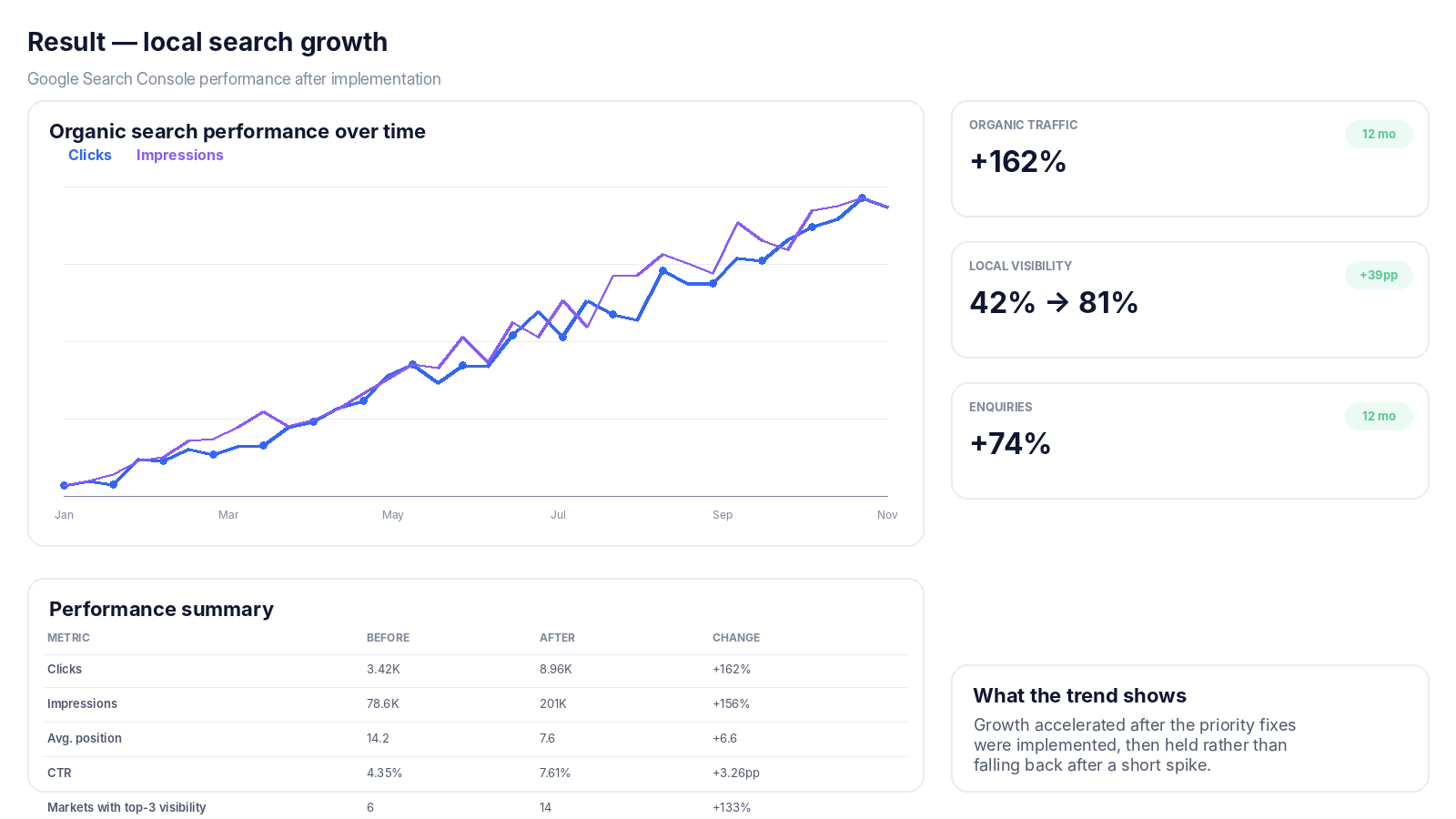
Results at a glance
Key outcomes delivered after the local SEO campaign.

Growth came from the right markets
The campaign did not try to make every location equally visible. It focused on markets with enough search demand, realistic ranking opportunity and genuine business value.
That produced more enquiries without expanding the website into a large set of near-duplicate city pages. It also gave the business a clearer framework for deciding which future locations deserved investment.
What made the difference
- Market prioritisation came before content production.
- Location pages were given distinct roles instead of cloned templates.
- Business Profile, website and internal-link signals were aligned.
- Authority work followed commercial priority rather than being spread evenly.
Local growth needs joined-up signals
Strong local performance comes from joined-up market signals, not from changing a town name inside the same template. The pages, Business Profiles, internal links, local proof and authority all need to reinforce the same market position.